History menu >
Hatley St George and families that lived there
Introduction
This is a short story about a Victorian mansion named
Hatley St George in Great Malvern in the county of Worcestershire, England,
and some of the families that lived there.
We borrowed a map of Great Malvern (East) 1926, from
the Malvern Family History Society, which showed a large building named
Hatley St George in extensive grounds sloping down towards the railway line
on the eastern side of Albert Road south. Although one of the largest houses
in Great Malvern, we had not heard of it before, so sought to investigate
its history.
Looking back at older maps in Great Malvern library we found that in 1884 the
building had earlier been known as Oak Hall. Further up
Albert Road at the junction with Woodshears Road stood a similarly named
house called
Oak Lodge. When we visited in 2015, Oak Lodge which stands on a large
sloping site, was being renovated (see photo below).
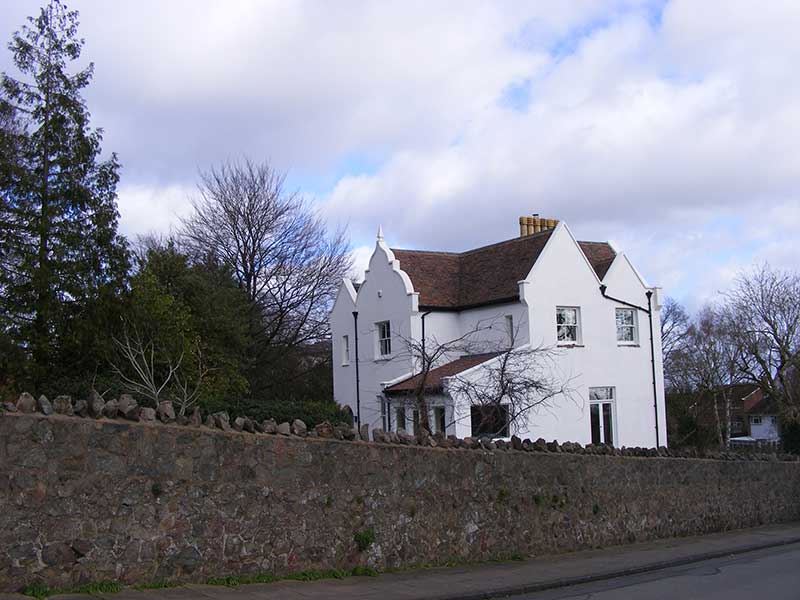
Oak Lodge, Albert Road South
Opposite Oak Lodge stands
Orwell Lodge, having a connection to the story of
water cure
Dr James Manby
Gully and his mistress, Florence Ricardo.
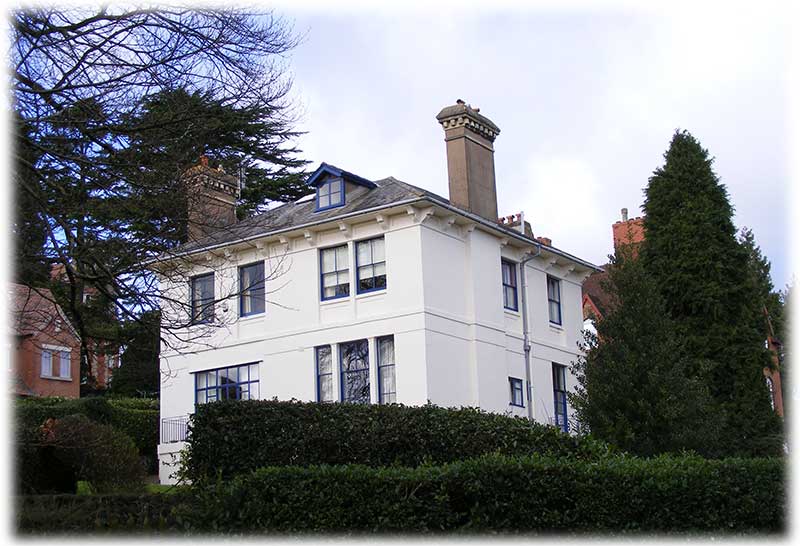
Orwell Lodge
Nowadays there is little to see of Hatley St George from the road as it is
hidden behind shrubbery and a modern extension called Hatley Court. The extension which dwarfs the original building was built on
the north side and is divided into flats.
Hatley St George was divided into apartments in
the 1960s to provide a rental income, and having been in the ownership of
one family since 1965, was being offered for sale by local estate agent John
Goodwin in 2015.
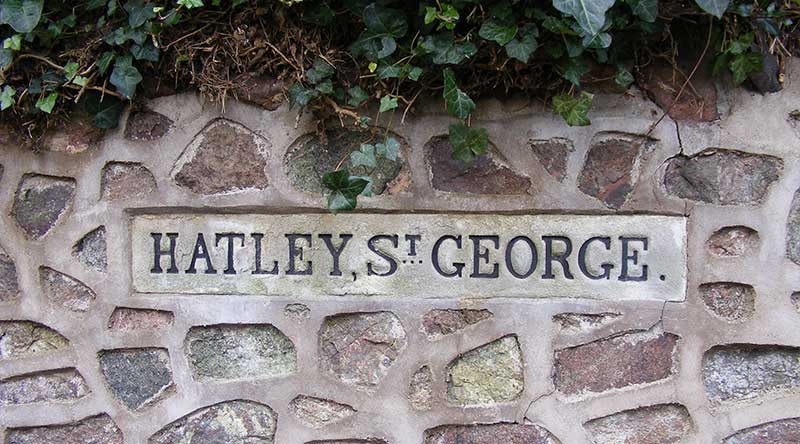
The name Hatley St George can still be found set
into the boundary wall; alongside a wooden board bearing the name Hatley Court.
Early years
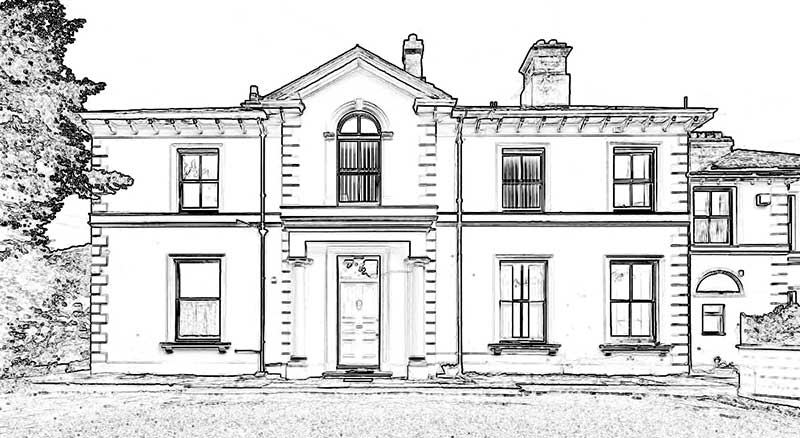
The line drawing below illustrates the front of the
property.
Many of the larger Victorian houses in Great Malvern were
built in the 1850s as the town expanded to meet growing numbers visiting
Malvern for the 'water cure'. The Holly
Mount mansion above the Worcester Road, where Princess Victoria stayed
when she visited Great Malvern with her mother the Duchess of Kent on 6th
August 1830, was built earlier - probably in the 1820s. Holly Mount
mansion was owned by Thomas Woodyatt RN, who has a memorial in Great Malvern Priory.
Currently we don't know exactly when Hatley St George was built.
The earliest mention we have found of the house is in the 1871 census when the building
was known as Oak Hall and widow Eleanor Seton-Karr was in residence. Eleanor
Seton-Karr is recorded in Trade Directories at Oak Hall until 1880.
Cora Weaver mentions in a story about the Springs and
Fountains of the Malvern Hills:
the drinking fountain known as the Wyche Spout was built
on the spoil heap from the 1836 widening of the Wyche Cutting after local
lady Mrs Seton-Karr had initiated a collection to provide the new facility.
The Wyche Spout opened in 1868, so Eleanor Seton-Karr may
have moved to Great Malvern not long after the death of her husband in 1862.
The Seton-Karr family
Eleanor Seton-Karr was the daughter of Henry Usborne of
Branches Park in Suffolk. In 1848 at London, Eleanor had married George
Berkeley Seton-Karr.
George Berkeley Seton-Karr born 1818 came from a
distinguished Scottish family. An earlier generation of Setons had appended
the name Karr through acquiring an inheritance. His father was Andrew
Seton-Karr of Kippilaw, Roxburghshire.
George Berkeley Seton-Karr was educated at
Haileybury and
entered the Indian Civil Service in Bombay. He became resident commissioner
at Baroda and served with distinction during the Indian Mutiny (1857-1858).
The census recorded the family living at Marylebone in London in 1861.
George Berkeley Seton-Karr was appointed to a new post in Chittagong in 1862
but died shortly after at Hastings Sussex, aged only 44 years, before he was
able to take up the new appointment.
Eleanor and George Seton-Karr had four children, who were born in
India:
Eleanor, Andrew, Henry, and Heywood Walter.
Eleanor did not marry and died in London in 1937; Andrew
we think died young, but the two youngest brothers went on to have notable
careers.
Sir
Henry Seton-Karr CMG DL (1853 - 1914) trained as a lawyer and became an
MP. He died in 1914 when the
Empress of Ireland tragically sank in the St Lawrence river, while he was
returning from a hunting trip in British Columbia. The vessel sank following
a collision with a Norwegian collier and it was the worst Canadian maritime
disaster in peacetime.
Heywood Walter Seton-Karr (1859 - 1938), who did not marry,
is listed in the Oxford Dictionary of National Biography. He was educated
Eton, Oxford and Sandhurst and after service in the army became an explorer
and big game hunter. He was a Fellow of the Royal Geographical Society, an
author of several books on travel and big game hunting, making sketches of
his finds and keeping a journal.
Was it a coincidence that one of the next families to live at Oak
Hall had the surname Heywood?
Thomas Heywood
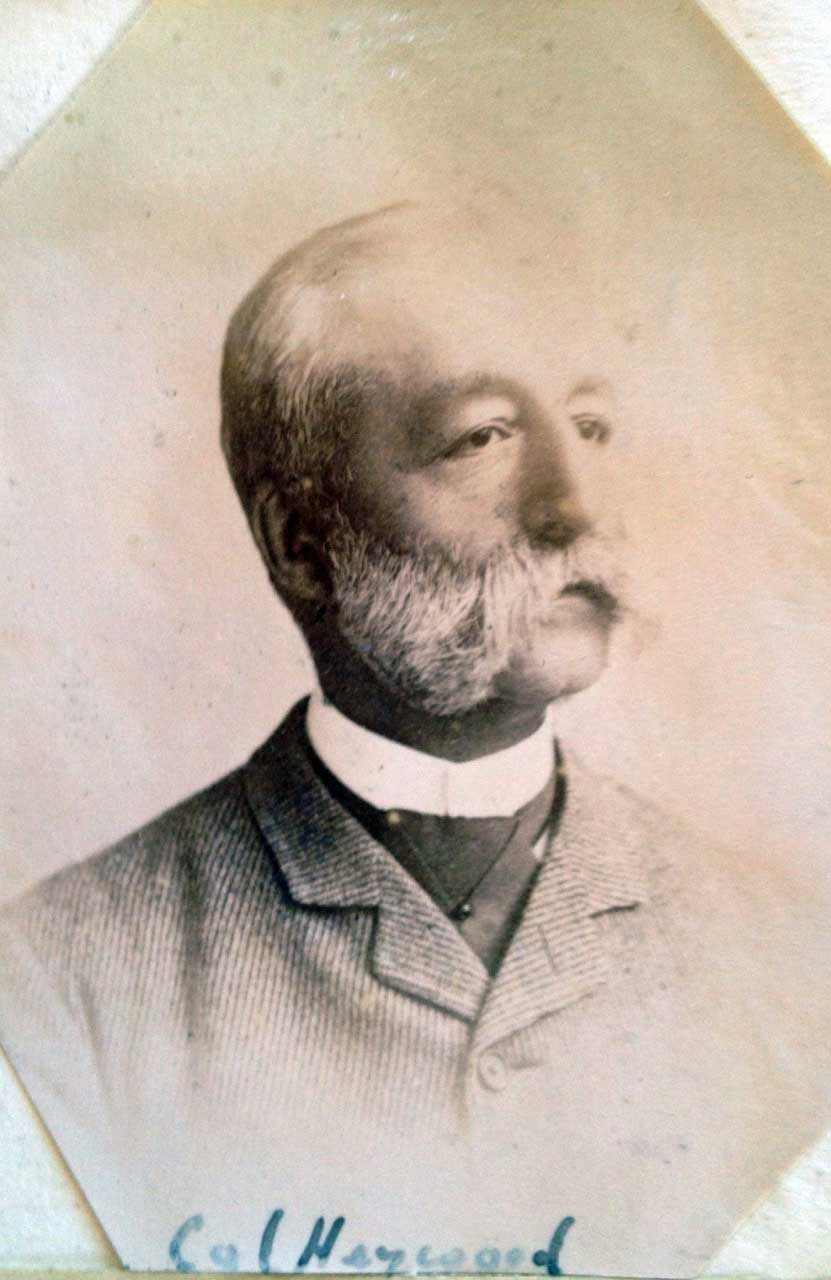 The
1891 census records Colonel Thomas Heywood JP (1826 - 1915) in residence
with his second wife, Sophie Grace St George. See Thomas's portrait opposite
from the Heywood-Butler family album (ref 8). The
1891 census records Colonel Thomas Heywood JP (1826 - 1915) in residence
with his second wife, Sophie Grace St George. See Thomas's portrait opposite
from the Heywood-Butler family album (ref 8).
We think that Oak Hall was renamed Hatley St George after
Sophie's ancestor
George St George (1658 - 1735) of Roscommon in Ireland, who was elevated
to the peerage for services to the Crown and created 'Baron St George, of
Hatley Saint George in the Counties of Roscommon and Leitrim'. Possibly the
family had originated from the parish of Hatley St George in Cambridgeshire.
Thomas Heywood was also from a notable family. His
grandfather Nathaniel Heywood was a founder
of Manchester based Heywood's Bank, and his father, another Thomas Heywood
(1797 - 1866) who lived in Herefordshire, was a noted antiquary who is listed in
the Oxford Dictionary of National Biography.
Before moving to Malvern, Thomas Heywood of Ocle Court was
Colonel Commandant with the Herefordshire Administrative Battalion of Rifle
Volunteers (69th Regiment) and President of the Herefordshire Rifle
Association. Previously he had been a Captain in 16th Lancers.
He had married first, Mary Emily Beresford (1830 - 1858).
Thomas and his second wife Sophie Heywood are recorded at Hatley St
George in the 1891 and 1911 census. In 1901 they were visiting Barmouth in
Wales with their daughter Ellen Mabel born in 1864 where we think Ellen's children were
at school.
Colonel Thomas Heywood died at Hatley St George on 2nd
April 1915 aged 88 years, and the National Archives records the house being
put up for sale in 1916. One of Thomas Heywood's executors was his
son-in-law Arthur Cartwright, an Inspector of Schools with HM Board of
Education, and perhaps it was through his contacts that Hatley St George was
eventually purchased by Malvern Girls' College in 1917.
Malvern Girls' College
Hatley St George then became a Junior House of Malvern
Girls' College. This was at a time when the school was based in a number of large houses
in Great Malvern, before the purchase of the Imperial Hotel in 1919.
Photos of the rear of the house and the hall
and stairway appear in Pamela Hurle's
book, Malvern Girls' College, a Centenary History. This records that the
school sold the house in 1963 and it was transformed into residential
apartments.
Malvern Girls' College in turn became Malvern St James
and the school archivist sent four pictures of those days reproduced below.
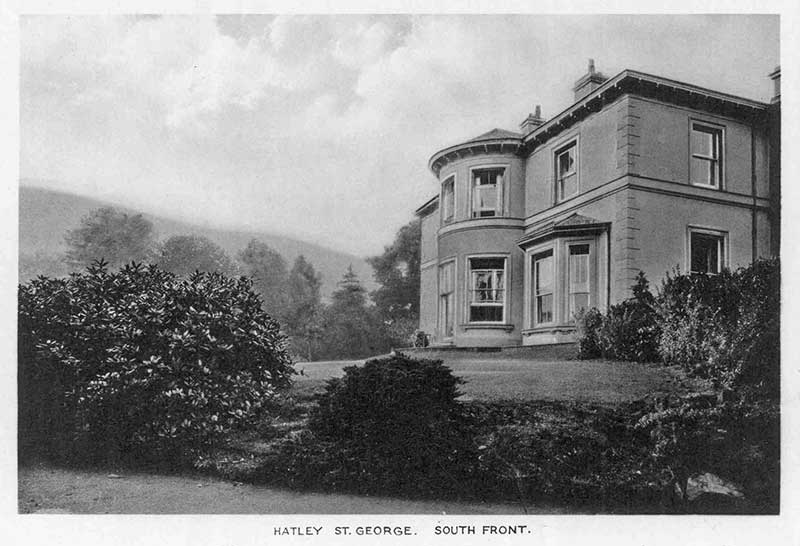
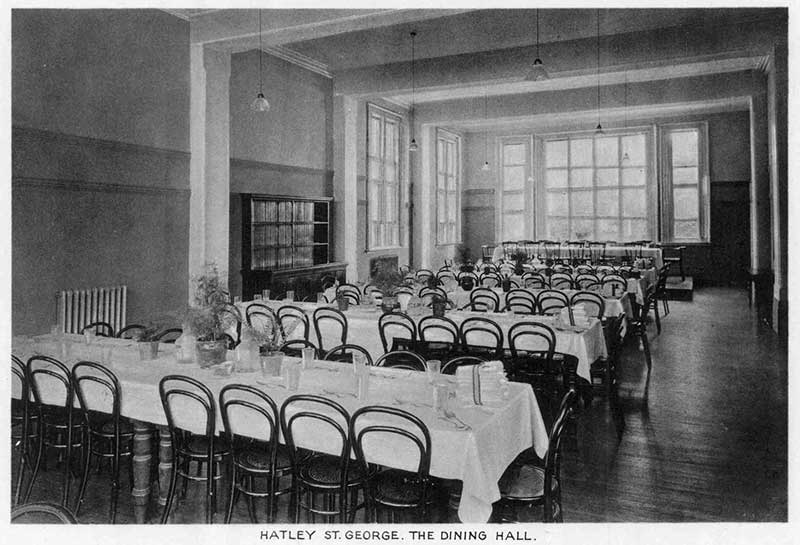
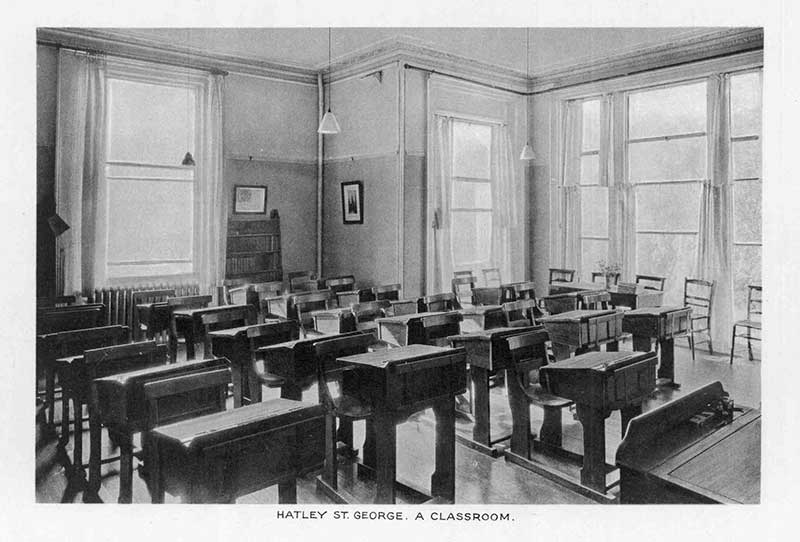
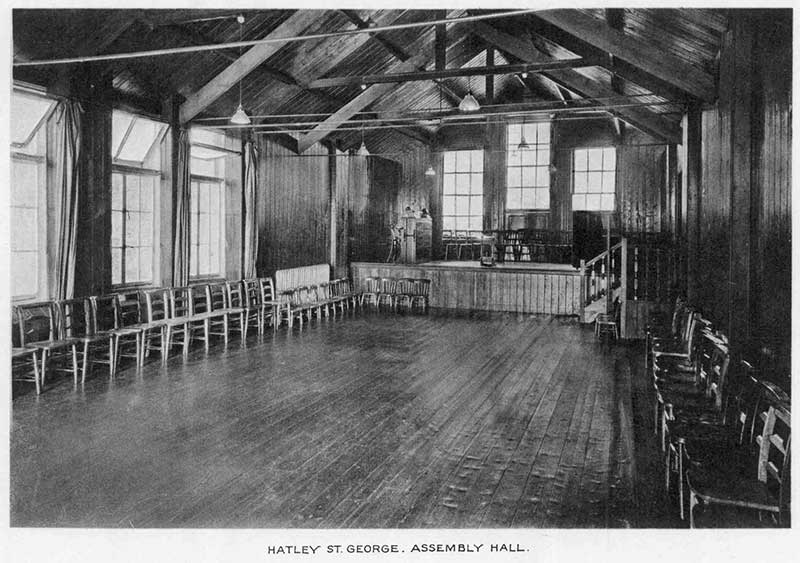
In 1918 Miss Dawson was head of the Junior House. She is mentioned in our
biography of one of the school founders,
Elizabeth Greenslade.
We would be interested to hear more about the house at
this stage of its history; for example we have discovered that between WWI and WWII Ruby Helena Margetts, the daughter of a butcher, taught
music at the school and possibly also at Abbotshill and The Priory. She was
born at Chipping Norton in 1883 and died at Malvern in 1961. In 1901, aged
17 years, she had been at the Beethoven House Music School in Northampton.
More about the Heywood family
So what became of the family of Thomas Heywood who had
lived at Hatley St George previously?
Thomas and his second wife Sophie had one daughter Ellen
Mabel Heywood (1864 - 1942) who in 1884 married Arthur Cartwright.
Arthur was the son of surgeon and general practitioner
John Cartwright and Sarah Stiles, of Calne in Wiltshire. Arthur had been
sent to Christ's Hospital boarding school from the age of 7 years and in
1911 was recorded as a Schools' Inspector with the Board of Education.
The couple lived for a time at The Knoll in Colwall and
had four children. Very sadly their two youngest sons died in WWI.
2nd Lt
Ronald William St George Cartwright (1894 - 1918) 16th Squadron Royal
Flying Corps died on 16th February 1918, and you will find out more about him
on the Colwall church website.
2nd Lt
Eric Percival St George Cartwright (1897 - 1916) of the Machine Gun
Corps was killed on 13th August 1916 at the Battle of the Somme. Like his
brother he is mentioned on the Colwall church website.
Their elder brother Kenneth survived the war and lived to
a good age.
Children of first marriage
Thomas Heywood had first married Mary Emily Beresford
(1830 - 1858) in Ireland in 1853. They had three children, Henry de la Poer
Beresford, Constance Mary and Emily Frances.
Thomas's wife Mary Emily died following the
birth of their third child.
Henry de la Poer Beresford Heywood (1855 - 1922) married
Minnie Florence Newton Lane. They had a son Marcus Beresford born in
Tewkesbury in 1886. and two daughters. Major Marcus Beresford Heywood DSO,
MVO survived the Great War.
Constance Mary Heywood (1856 - 1940) married Alfred
Joshua Butler (1850 - 1936) at Bromyard in 1882. Alfred was the son of a
clergyman, educated Christ's Hospital and Brasenose College Oxford, who
became a curator of the Ashmolean Museum. Their eldest son Sir Harold
Beresford Butler (1883 - 1951) joined the Civil Service and had a
distinguished career in the Home Office. He is listed in the Oxford
Dictionary of National Biography.
Youngest daughter Emily Frances Heywood did not marry and
died at Oxford in 1919.
Heywood family photos
A descendant of the family very kindly sent some photos
of Thomas Heywood from the Heywood/Butler family album (ref 8); for example see
portrait of Thomas above. Although not all the photos are pin sharp, we
thought you would like to see them as they give an interesting glimpse of
Victorian and Edwardian society.
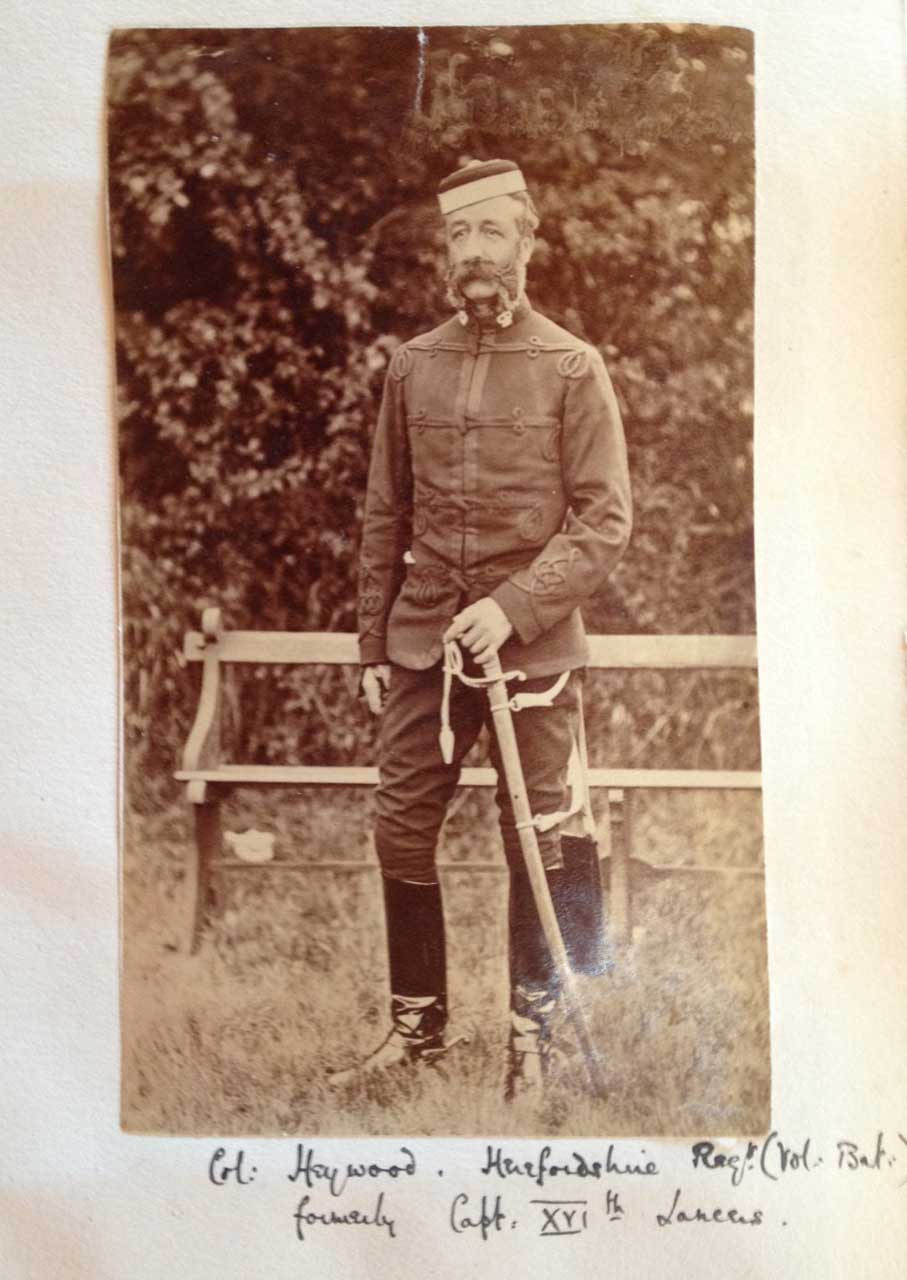 The
first photo shows Thomas Heywood in military uniform in middle age, possibly
the photo was taken about 1880 when the family was living in Herefordshire.
The caption mentions that he had previously been a Captain in the
16th Lancers,
a cavalry unit dating back to Napoleonic times. The
first photo shows Thomas Heywood in military uniform in middle age, possibly
the photo was taken about 1880 when the family was living in Herefordshire.
The caption mentions that he had previously been a Captain in the
16th Lancers,
a cavalry unit dating back to Napoleonic times.
Click to go to
Lancers' museum website
In the past officers often bought their commissions, but
were refunded when they left the service providing they did not blot their
copy book - a clever inducement to behave.
Other photos tell us that Thomas had been Master of
Foxhounds of his local hunt; probably this was in Herefordshire before
Thomas retired to Malvern circa 1890.
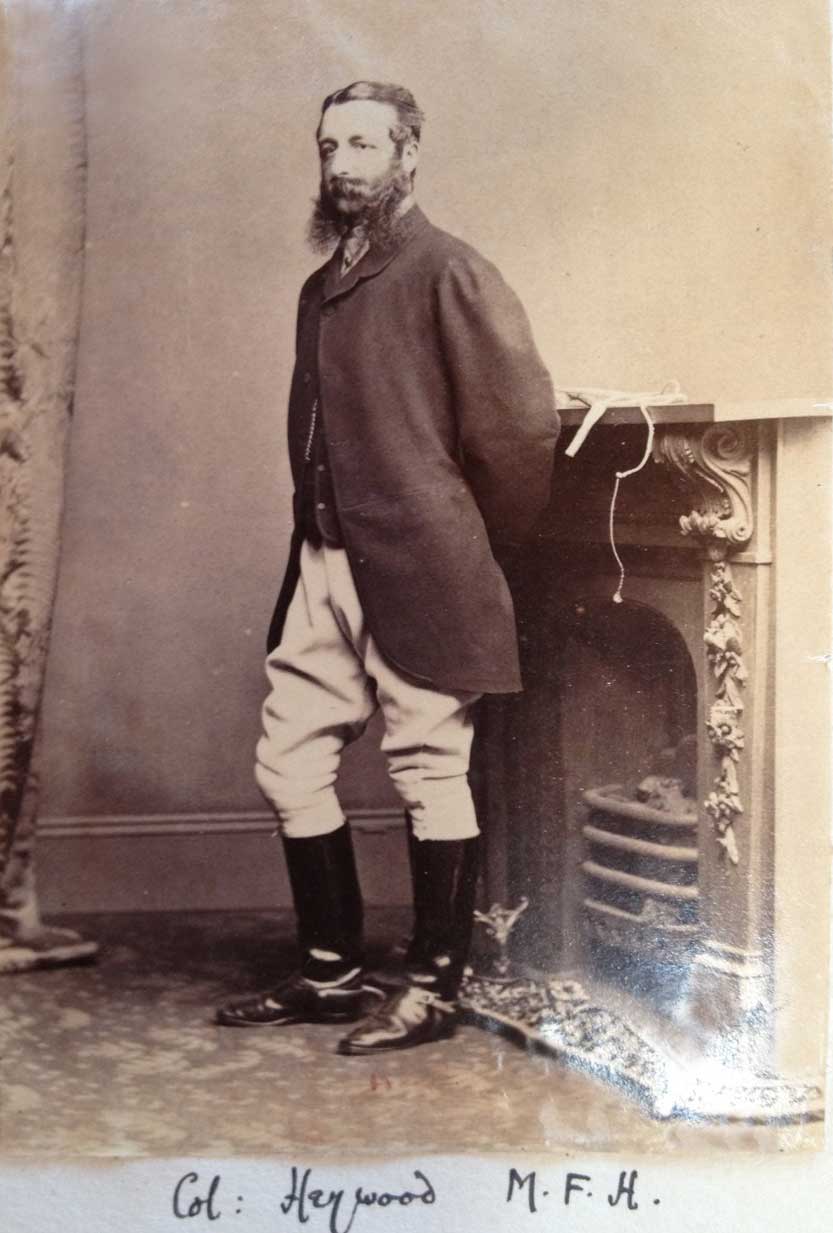 The
photo on the left shows Thomas as a younger man, possibly about 1860. His
riding boots have a good shine! The
photo on the left shows Thomas as a younger man, possibly about 1860. His
riding boots have a good shine!
In the photo below, with hounds, Thomas is somewhat older. Something
seems to have drawn the hounds attention, but it's interesting that they kept still long enough for the lengthy exposures required in those
days.
Hunting seems to have been a social occasion during the winter when crops
were not growing and farmers had little else to do!
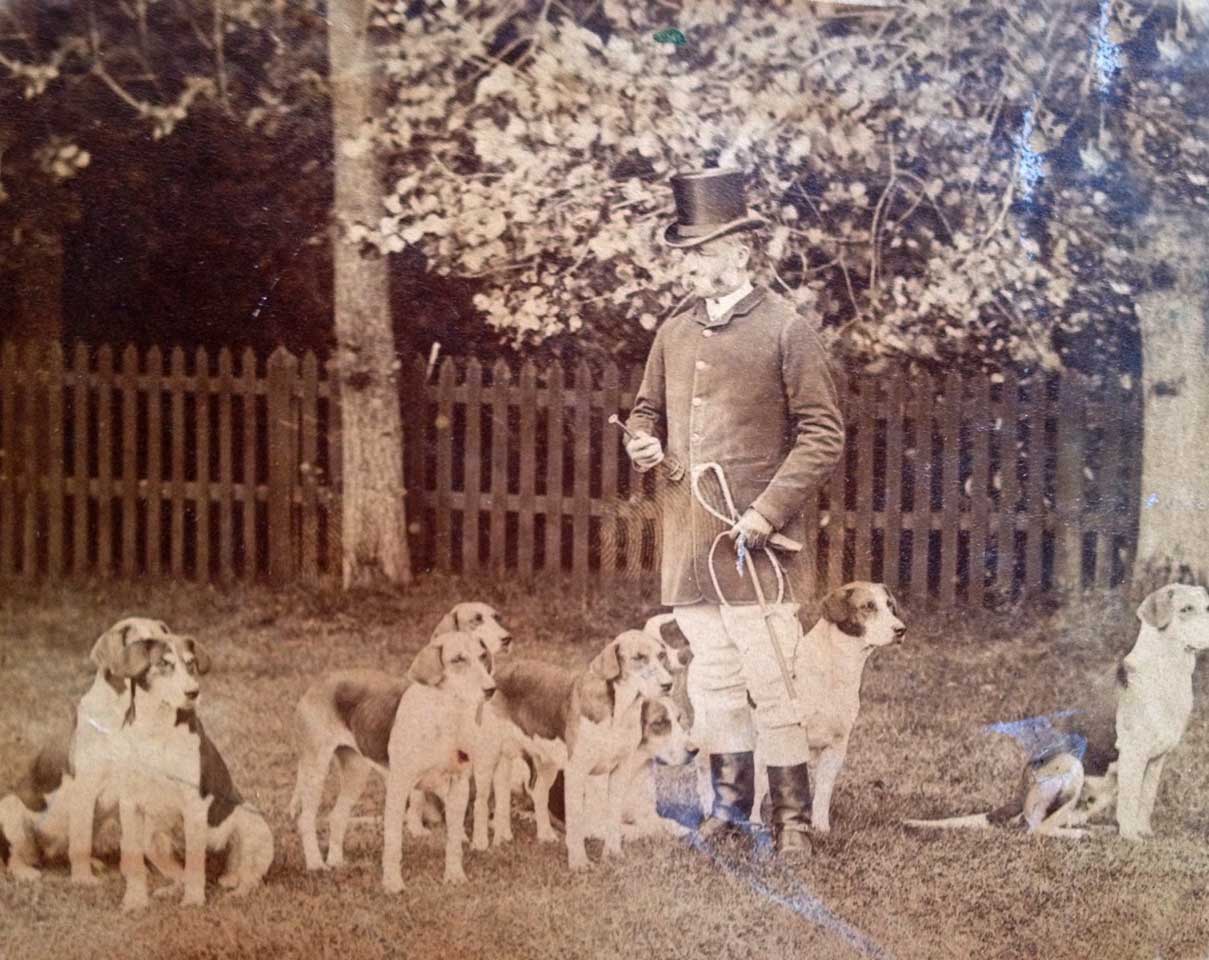
Col Heywood MFH
The photo below shows Thomas and Sophie arriving at Hatley St George in a
carriage. The photograph was almost certainly specially posed.
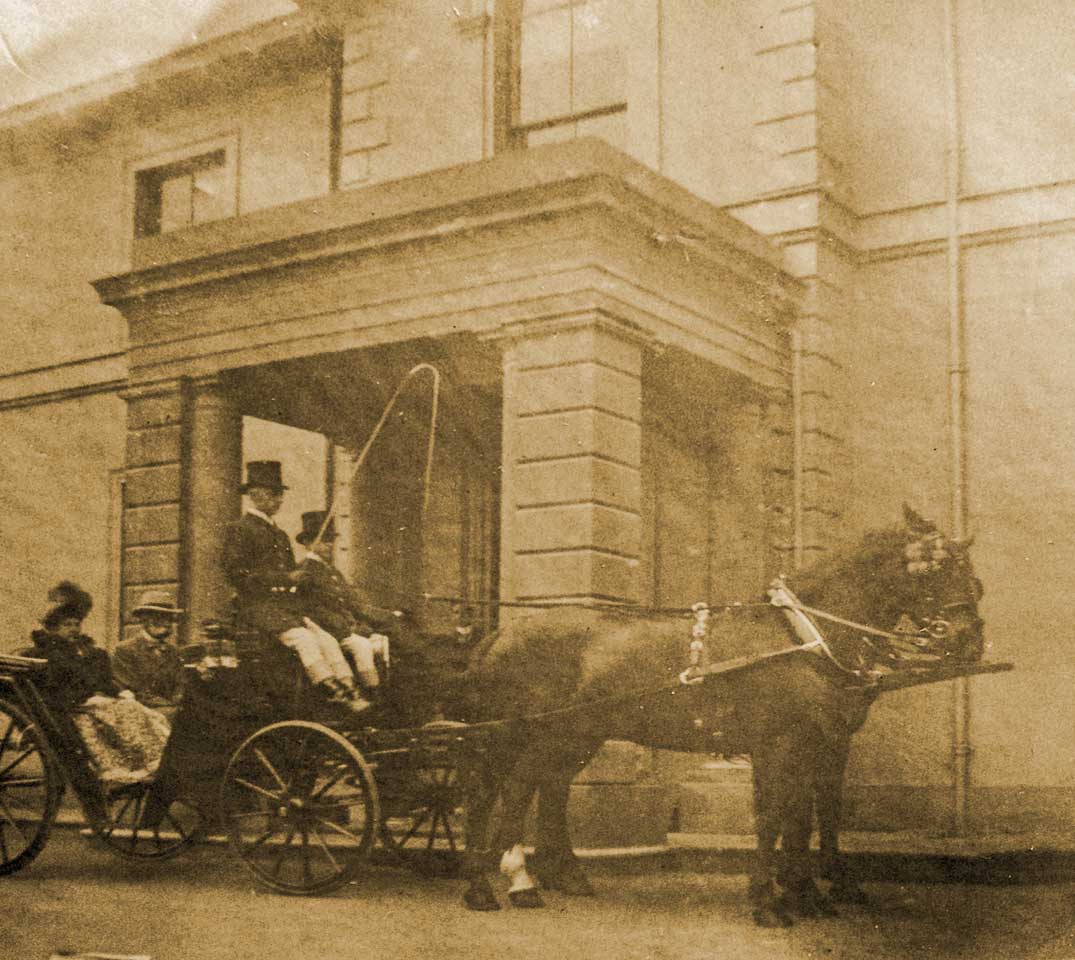
Carriage outside Hatley St George
It is perhaps a reminder that for most of his life Thomas would not have seen
a motor car, and that there was no gas or electricity. Heating would have
been from coal fires, and lighting from either candles or parafin lamps.
Early to bed in those days, else possibly a nap in front of a warm fire.
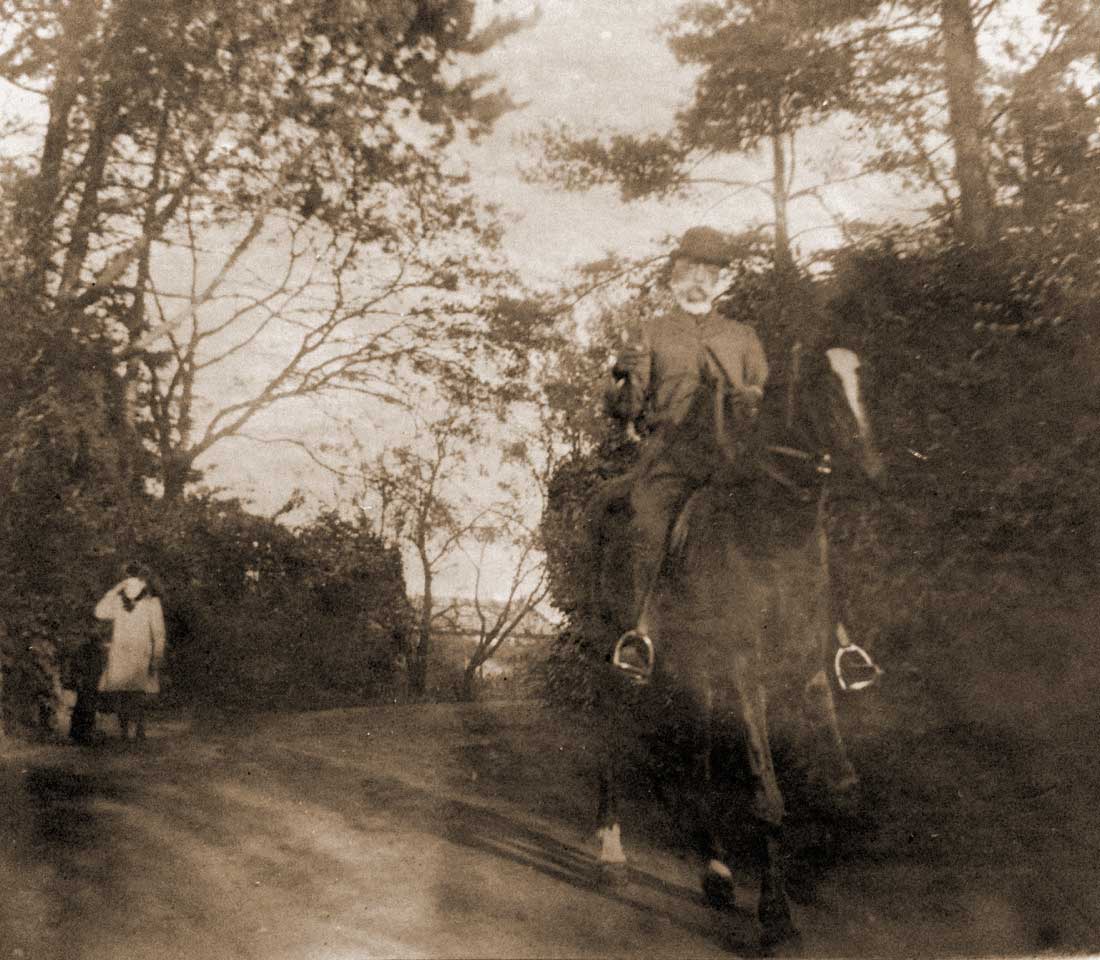
The last but one photo shows Col Heywood on a thoroughbred horse. Despite
his age he still cuts an erect and dashing figure.
The final charming photograph shows Thomas Heywood in old age in the back
garden of Hatley St George with his second wife Sophie and their dogs.
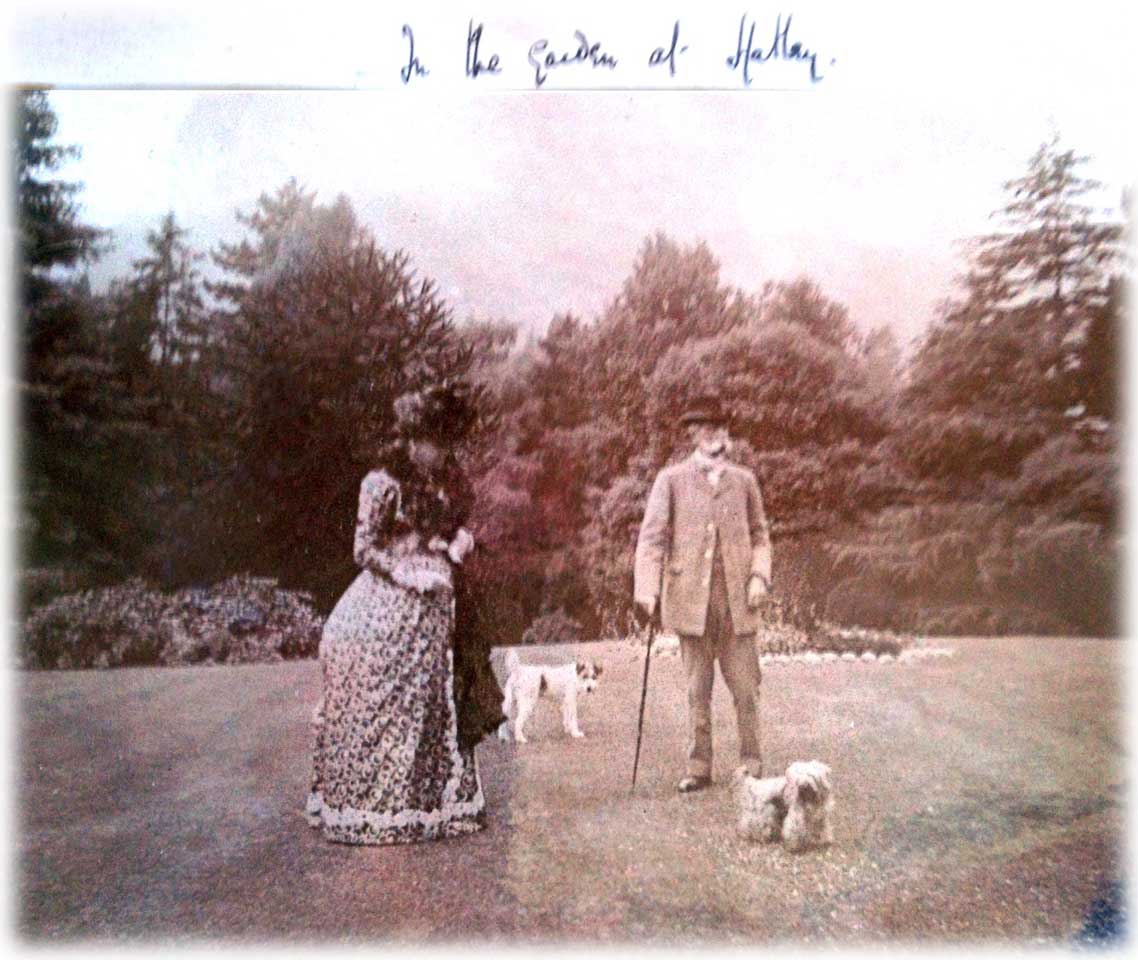
This was the last time the gentry would occupy Hatley St George, as society
would be for ever changed by the Great War, and the house became a school.
Postscript
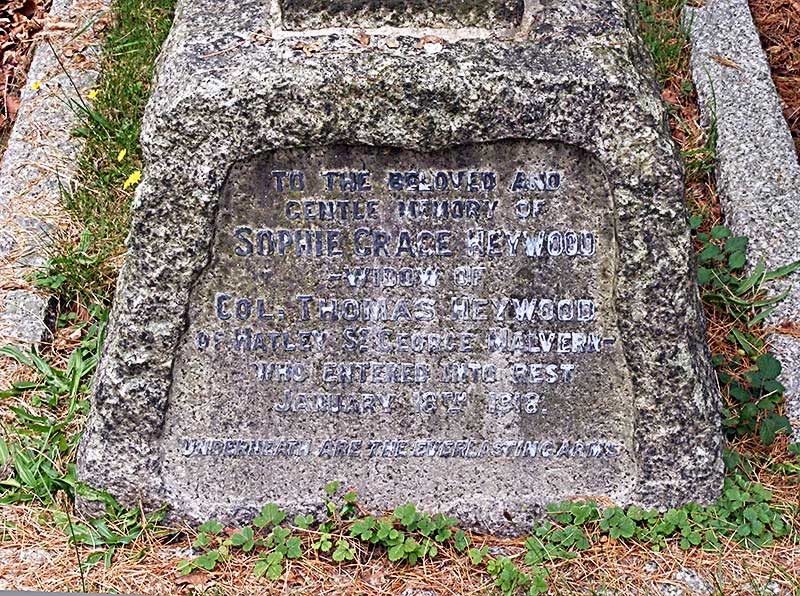 While
walking in Great Malvern cemetery, by chance, we came across the grave of
Sophie, south of the chapel. The inscription on the memorial reads: While
walking in Great Malvern cemetery, by chance, we came across the grave of
Sophie, south of the chapel. The inscription on the memorial reads:
To the beloved and gentle memory of Sophie Grace Heywood, widow of Col.
Thomas Heywood of Hatley St George Malvern, who entered into rest January
18th 1918.
Underneath are the everlasting arms
References
- Ordnance Survey Map of Great Malvern (East) 1926
- Map of Great Malvern 1884
- England and Wales census 1851 to 1911
- National Probate Calendar
- Kelly's Trade Directories
- Hurle, Pamela, Malvern Girl's College, A Centenary History (page
24), published by Phillimore 1993
- Jenkins Elizabeth, Dr Gully, published by Michael Joseph Ltd, 1972. (A
fictional account based on fact of the romance between Dr James Manby Gully
and Florence Ricardo.)
- Communication from G Servais, November 2015
- Communication from K Powell, Malvern St James, July 2017
Back to top
If you are able to correct or add to the story on this
page please get in touch by contacting the webmaster
|